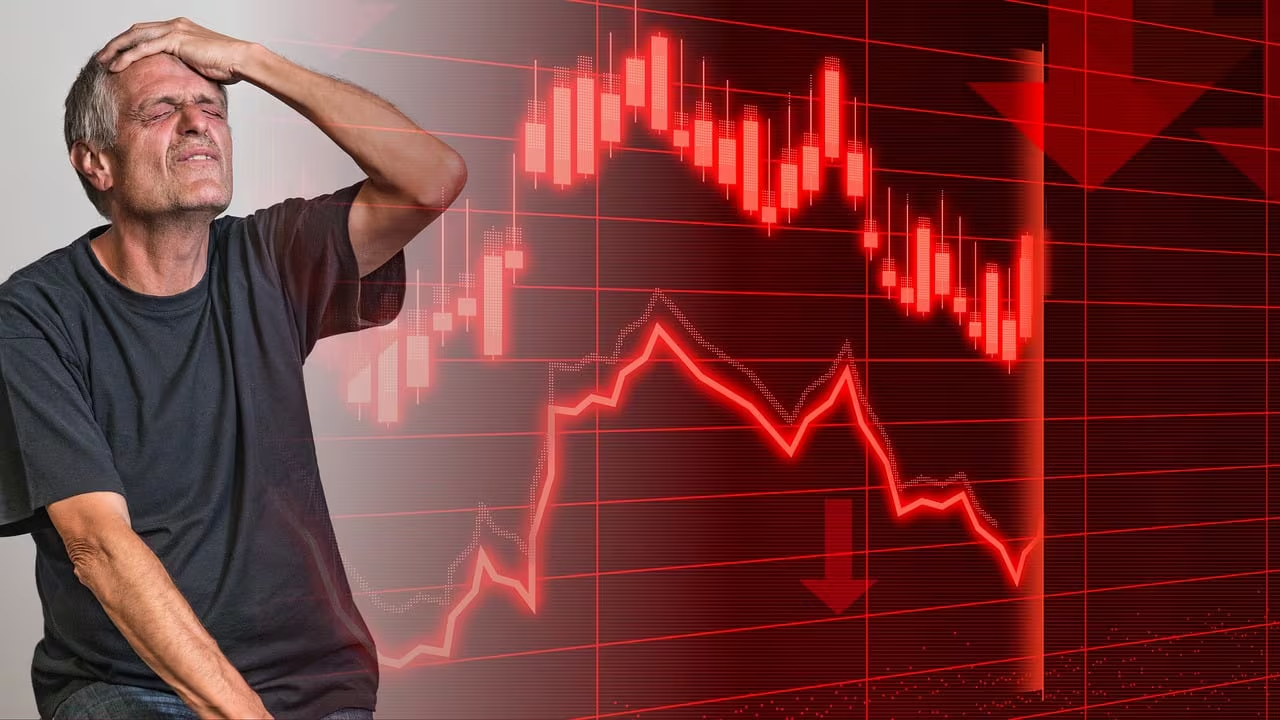
Indian Stock Market Crash Today: On February 24, 2026, the Indian stock market shocked investors with a sudden crash, wiping out massive wealth and triggering widespread panic across sectors.
Indian Stock Market Crash Today: What Happened on February 24, 2026
Today turned into one of the most unsettling trading sessions for Indian investors in recent months. After opening on a cautious note, the market suddenly lost momentum. Consequently, panic selling took over, pushing key indices sharply lower.
The Sensex plunged by 1,068 points to close at 82,225. Meanwhile, the Nifty dropped 288 points to settle at 25,424. Moreover, this steep fall erased nearly ₹3 lakh crore of investor wealth within hours, highlighting the fragile market sentiment.
However, this crash did not happen overnight. Instead, it reflected growing global uncertainty, sector-specific fears, and mounting pressure from international developments.
Also Read: Rajputana Stainless IPO 2026: GMP, Price Band ₹122, Lot Size & Should You Apply?
Why Investors Panicked: Key Reasons Behind the Market Fall
The sharp decline resulted from multiple triggers working together. Therefore, confidence weakened across retail and institutional investors alike.
Global Trade Tensions: US President Donald Trump’s renewed tariff warnings created fresh worries. He hinted at imposing tariffs of up to 15% on countries that “play games” in trade deals. As a result, export-driven Indian companies came under pressure.
Rising AI Concerns in IT Sector: Additionally, fears around artificial intelligence disrupted technology stocks. The launch of Anthropic’s “Cloud Code” tool sparked concerns that automated coding could reduce demand for human programmers. Consequently, global tech stocks declined, and Indian IT giants also faced heavy selling.
F&O Expiry and Crude Oil Prices: Meanwhile, monthly derivatives expiry increased volatility. On the other hand, rising tensions between the US and Iran pushed crude oil prices above $72 per barrel. Since India depends heavily on imports, higher oil prices raised inflation worries.
Together, these factors created a perfect storm, leaving investors with little confidence to hold positions.
Top Gainers and Losers in Today’s Trading Session
IT stocks suffered the most damage during today’s crash. Moreover, selling pressure spread across banking and financial shares, limiting any chance of recovery.
Also Read: Meesho Share Price Crashes 10% After ₹1,499 Crore Tax Demand — What Investors Should Know
| Stock | Performance |
|---|---|
| Tech Mahindra | -6.6% |
| HCL Tech | -6.1% |
| Infosys | -3.5% |
| TCS | -3.2% |
| Wipro | -3.0% |
| NTPC | +1.9% |
| Coal India | +1.3% |
| JSW Steel | +1.1% |
| Hindustan Unilever | +0.6% |
Tech Mahindra emerged as the biggest loser, followed by HCL Tech and Infosys. Additionally, TCS and Wipro slipped close to their 52-week lows. On the positive side, NTPC, Coal India, and JSW Steel offered limited relief.
However, these gains were too small to offset the broader market losses.
Impact on Investor Wealth and Market Capitalisation
The heavy sell-off caused massive damage to investor wealth. Consequently, the total market capitalisation of BSE-listed companies fell to around ₹465 lakh crore.
This decline wiped out crores of rupees in a single trading session. Moreover, continued selling by foreign institutional investors added further pressure.
As a result, the Indian rupee weakened to 90.95 against the US dollar. A weaker currency increases import costs and discourages foreign investment. Therefore, market participants now fear more capital outflows in the coming days.
Additionally, rising inflation expectations and global uncertainty are forcing investors to adopt a cautious approach.
What This Market Crash Means for Investors
Today’s crash serves as a reminder that markets can change direction quickly. However, it also highlights the importance of long-term planning and disciplined investing.
Experienced investors understand that corrections are part of market cycles. Therefore, instead of reacting emotionally, they focus on strong fundamentals, diversified portfolios, and risk management.
Meanwhile, short-term traders should remain alert to volatility caused by global news, commodity prices, and technological disruptions. On the other hand, long-term investors may find selective opportunities once stability returns.
In conclusion, February 24, 2026, will be remembered as a tough day for Indian markets. Yet, history shows that resilience and informed decision-making help investors navigate even the most challenging phases.