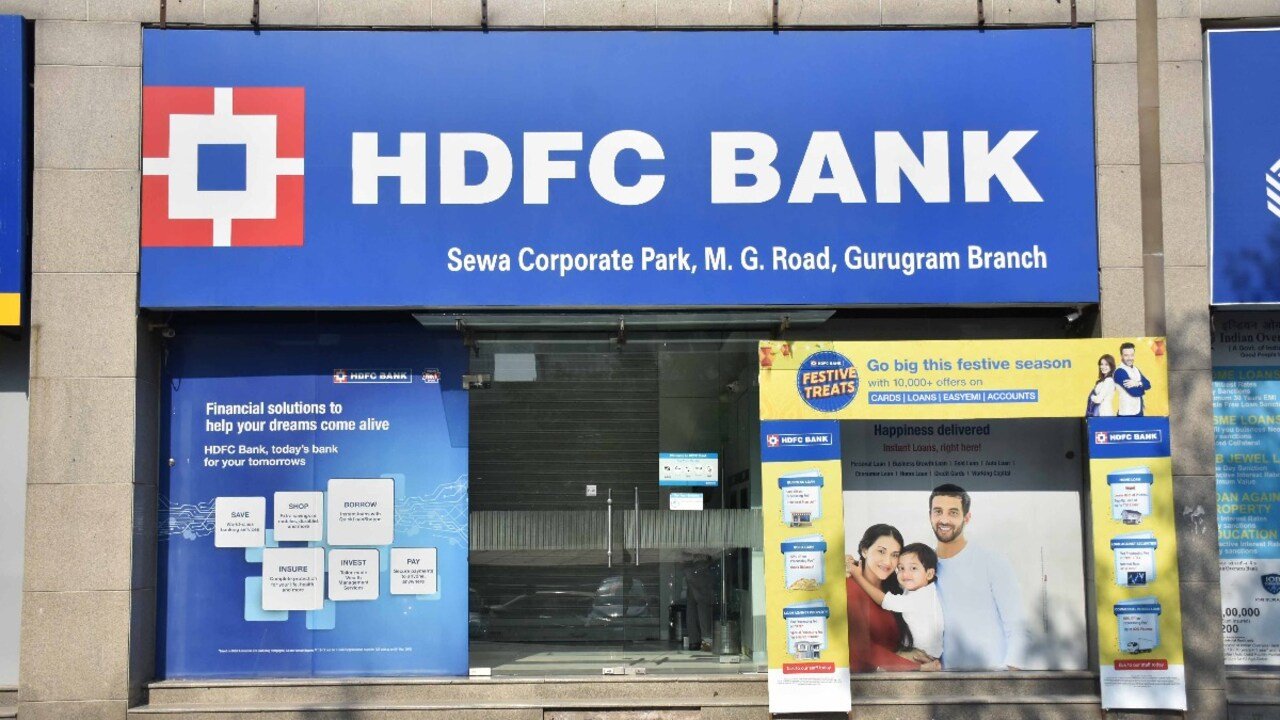
HDFC Bank share price today reflects market pressure and investor caution, as global cues and profit booking impact short-term trends while long-term confidence remains strong.
Shares of HDFC Bank faced noticeable pressure in today’s trading session, closing lower at ₹915.60. Although the stock showed early signs of recovery, broader market uncertainty and domestic selling activity eventually pulled prices down. Consequently, many investors are now closely watching key technical levels to understand what may come next.
Moreover, as one of India’s most influential private banks, HDFC Bank’s daily movement often reflects wider market sentiment. Therefore, even a small decline in its share price tends to attract strong attention from traders and long-term investors alike.
HDFC Bank Share Price Today: Opening, High, Low, and Closing Details
HDFC Bank shares opened on a positive note at ₹929, showing early optimism among market participants. Additionally, the stock touched an intraday high of ₹929.20 during morning trade. However, selling pressure gradually increased as the session progressed.
Also Read: 8th Pay Commission 2026: ₹18,000 Salary May Rise to ₹30,000 – Govt Seeks Public Suggestions
Meanwhile, profit booking and weak global cues reduced buying momentum. As a result, the stock slipped close to its day’s low of ₹912.45 before settling at ₹915.60. Consequently, the share price ended the day nearly 0.98% lower than the previous close.
| Feature | Details |
|---|---|
| Opening Price | ₹929.00 |
| Day’s High | ₹929.20 |
| Day’s Low | ₹912.45 |
| Closing Price | ₹915.60 |
| Daily Change | -0.98% |
Furthermore, heavy selling was observed across the banking sector, and HDFC Bank was among the most impacted stocks. Since it carries significant weight in the Nifty and Bank Nifty indices, its decline also influenced overall market performance.
Technical Analysis of HDFC Bank Stock: Support and Resistance Levels
From a technical perspective, HDFC Bank is currently trading below its 5-day moving average. Therefore, in the short term, this signals mild bearishness. However, experienced analysts suggest that this weakness may remain temporary if strong support levels hold.
Additionally, the ₹900 to ₹910 zone continues to act as a crucial support area. On the other hand, if this level fails, further downside pressure may emerge. Consequently, traders are monitoring this range very closely in the coming sessions.
Meanwhile, the stock faces strong resistance between ₹932 and ₹935. If prices manage to cross this range with healthy volume, a fresh breakout may occur. Therefore, this zone will remain a key decision point for short-term traders.
Moreover, chart patterns indicate consolidation rather than a complete trend reversal. This suggests that HDFC Bank may remain range-bound unless fresh triggers appear.
Also Read: PM Kisan 22nd Installment 2026: ₹2,000 Payment Date, Beneficiary Check & Latest Update
HDFC Bank Share Price Outlook: Short-Term and Long-Term Predictions
Looking ahead, two major scenarios are currently shaping market expectations. Firstly, if the stock breaks below ₹910, it may slip further toward the ₹886 support zone. Consequently, short-term traders should remain cautious during such movements.
However, if broader market sentiment improves and HDFC Bank crosses ₹935, renewed buying interest may return. In that case, the stock could start a fresh upward trend. Therefore, upcoming sessions will be crucial in defining the next direction.
Additionally, most domestic brokerage firms continue to maintain a positive long-term view. The average target price remains close to ₹1,139, indicating meaningful upside from current levels. Moreover, this optimism is based on the bank’s strong balance sheet and consistent earnings performance.
Meanwhile, analysts also highlight stable credit growth and improving margins as long-term growth drivers. As a result, institutional investors remain confident in the bank’s future prospects.
Investor Strategy for HDFC Bank Shares During Market Volatility
Despite short-term weakness, HDFC Bank’s fundamentals remain solid. Over the past five years, the bank has delivered steady profit growth and maintained strong asset quality. Therefore, long-term confidence in the stock continues to remain intact.
For short-term and intraday traders, discipline is essential. Additionally, setting a strict stop-loss near ₹900 can help limit downside risk. Consequently, traders can protect their capital during periods of high volatility.
On the other hand, long-term investors may view current declines as buying opportunities. Moreover, a “buy on dips” strategy can help accumulate quality shares at relatively lower prices. This approach aligns well with HDFC Bank’s consistent growth trajectory.
Furthermore, the bank’s focus on digital banking, retail expansion, and customer-centric services strengthens its competitive position. Therefore, investors who remain patient may benefit from compounding returns over time.
In conclusion, while today’s decline has raised short-term concerns, HDFC Bank’s strong fundamentals and positive long-term outlook continue to inspire confidence. Consequently, informed investors should balance technical signals with business strength before making decisions.