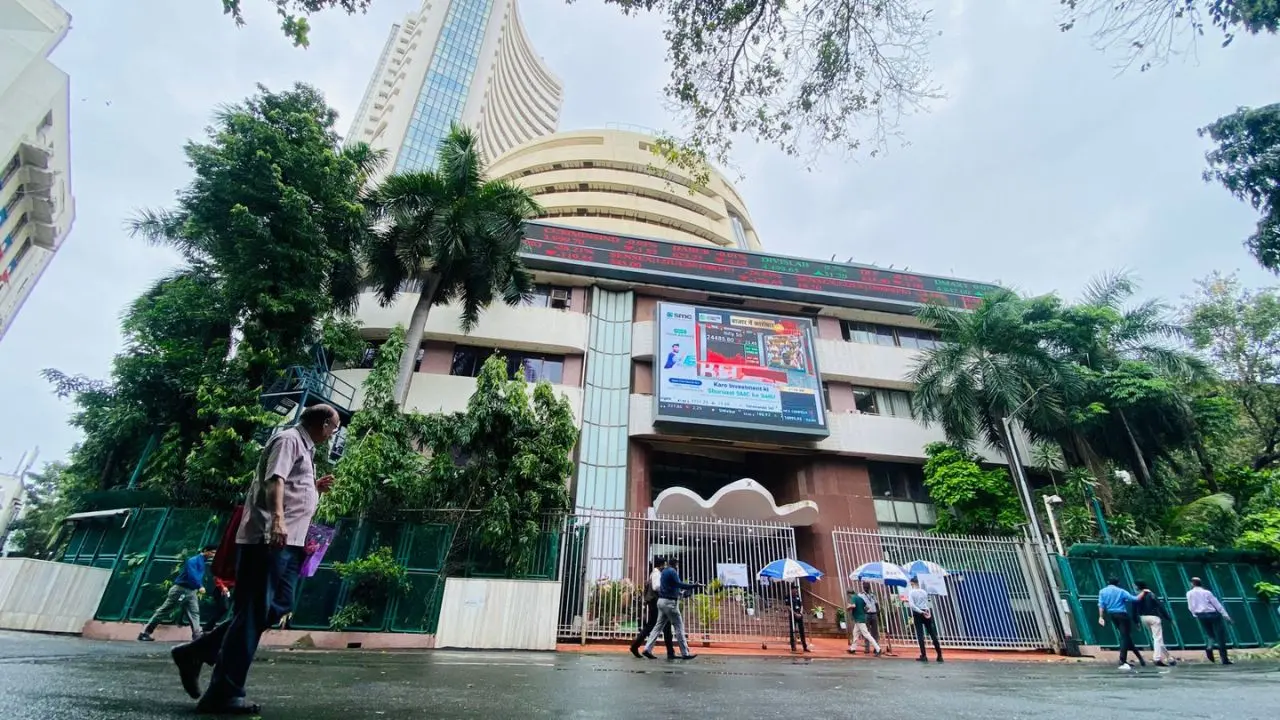
Indian Stock Market Crash Today: Sensex and Nifty tumble over 1%, ₹5 lakh crore wiped out as global tensions and weak cues trigger heavy selling.
Friday, February 27, turned into a painful session for Dalal Street. Investors watched in disbelief as heavy selling dragged benchmark indices sharply lower. Moreover, weak global signals and rising geopolitical tensions dented confidence across sectors. By the closing bell, nearly ₹5 lakh crore in market value had evaporated, leaving traders cautious heading into the weekend.
Sensex and Nifty Close Deep in the Red Amid Heavy Selling
The market opened on a subdued note and struggled to find direction in early trade. However, selling pressure intensified in the afternoon session, pushing indices to day’s lows. The BSE Sensex plunged 961.42 points to close at 81,287.19. Meanwhile, the Nifty 50 dropped 317.90 points and settled at 25,178.65.
Intraday, the Sensex fell more than 1,000 points at one stage, clearly reflecting panic-driven trades. Additionally, broader market indices also remained under pressure, indicating that weakness was not limited to large-cap stocks.
Also Read: Rajputana Stainless IPO 2026: GMP, Price Band ₹122, Lot Size & Should You Apply?
From a technical perspective, the Nifty slipped below its 200-day moving average, a key long-term indicator closely tracked by market participants. Consequently, analysts now see the 25,000 level as a crucial psychological support zone. On the upside, 25,350 may act as immediate resistance in the coming sessions.
Key Reasons Behind Today’s Stock Market Fall
Several global and domestic factors combined to trigger this sharp decline. Firstly, reports of stalled nuclear negotiations between the United States and Iran reignited concerns in the Middle East. As a result, crude oil prices surged above $72 per barrel, raising inflation worries for oil-importing countries like India.
Moreover, foreign institutional investors (FIIs) continued their selling streak, adding further pressure to domestic equities. Persistent outflows often amplify volatility, especially when global uncertainty remains high.
Meanwhile, weakness in global technology stocks also weighed heavily on sentiment. Shares of Nvidia saw a sharp correction in the US market, sparking concerns across global IT counters. Therefore, Indian technology stocks felt the ripple effect during today’s session.
In addition, investors preferred to stay on the sidelines ahead of India’s third-quarter GDP data scheduled for release later in the evening. This caution led to profit-booking across sectors, further accelerating the decline.
Sector-Wise Impact: Banking and Auto Stocks Under Pressure
Almost every major sector ended the day in the red. Banking and auto stocks faced notable selling, dragging the Nifty Bank index closer to the critical 60,000 mark. On the other hand, defensive pockets offered limited support but failed to offset broader weakness.
Also Read: Meesho Share Price Crashes 10% After ₹1,499 Crore Tax Demand — What Investors Should Know
The day’s volatility also followed heightened concerns around the recent Pahalgam attack, which added to risk aversion in the market. Consequently, traders adopted a defensive stance, reducing exposure in high-beta stocks.
Top Gainers and Losers in Today’s Trade
Among the Nifty constituents, several heavyweight stocks closed significantly lower.
Major Losers: Adani Enterprises, Maruti Suzuki, Bharti Airtel, and Sun Pharma declined by up to 2.5%, reflecting widespread selling pressure.
However, not every stock ended in the red. Select counters showed resilience despite the broader downturn.
Gainers: Trent and Infosys managed modest gains, demonstrating relative strength in a weak market.
Additionally, Redington emerged as a standout performer, surging nearly 15% after a positive statement from Apple CEO Tim Cook. This development provided rare optimism in an otherwise gloomy trading session.
What Investors Should Watch Next
Going forward, market participants will closely monitor global developments, especially crude oil price movements and geopolitical headlines. Moreover, the trajectory of foreign institutional investment flows will remain crucial for short-term direction.
Technically, holding above the 25,000 mark on the Nifty will be important to prevent further downside. However, sustained buying interest is necessary to restore confidence. Therefore, volatility may continue in the near term as traders react to macroeconomic data and global cues.
For long-term investors, disciplined asset allocation and a focus on fundamentally strong companies remain essential. Short-term fluctuations, although uncomfortable, are part of equity market cycles.